10 Agentic AI Search Trends Reshaping SEO, AEO, and GEO Heading Into 2027
Heading into 2027, the rise of autonomous AI agents capable of browsing and comparing data independently is fundamentally transforming digital visibility. Here is our forward-looking analysis of ten key trends reshaping SEO, AEO, and GEO.
In short
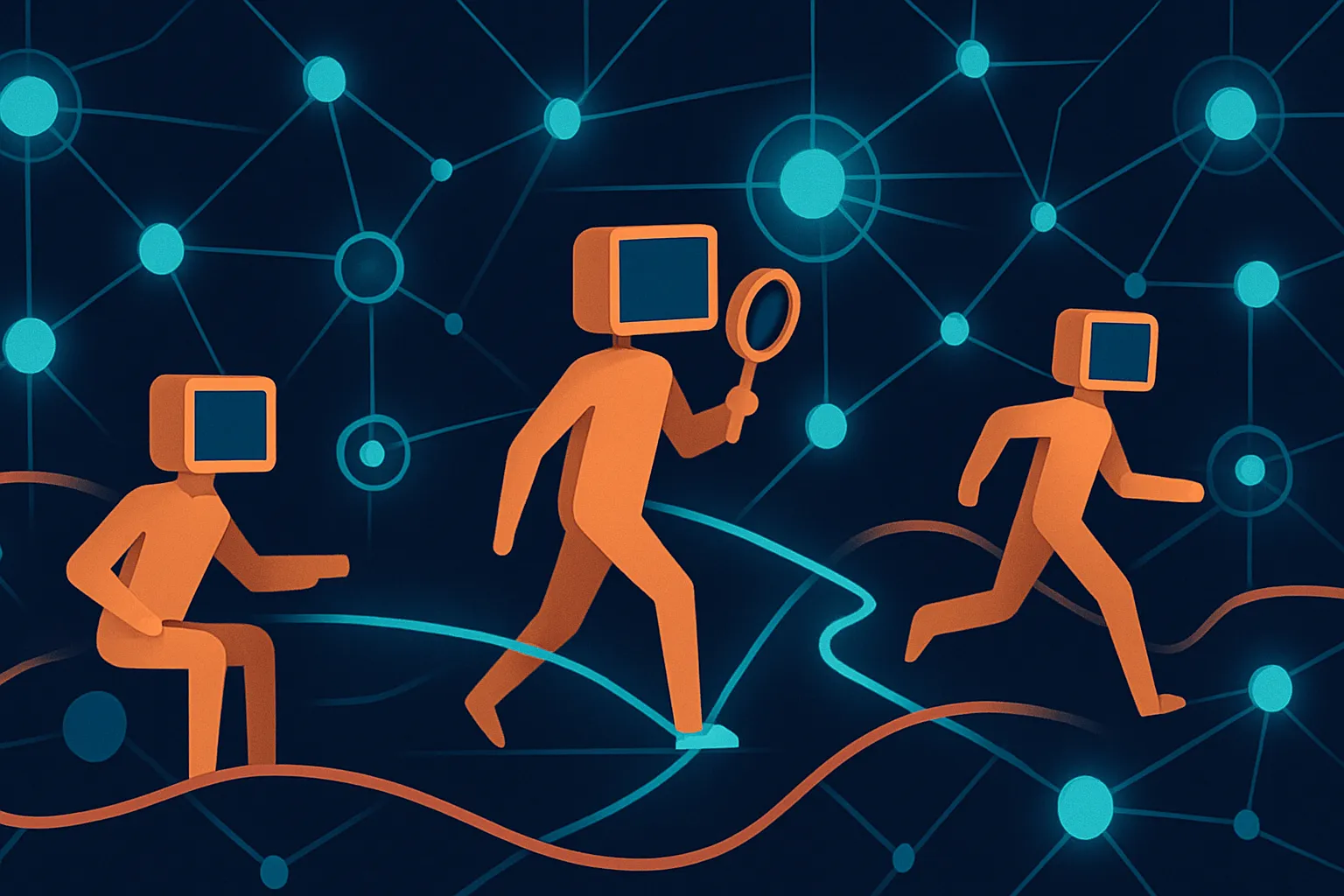
In short, agentic AI refers to autonomous systems executing complex search tasks on behalf of users. According to our analysis, this evolution transforms SEO, AEO, and GEO by shifting focus from simple keyword targeting to a website's ability to supply clean, structured data directly actionable by crawlers and generative engines.
On this page
- Trends 1 to 3: The Evolution of Agentic Crawling and Indexing
- Trends 4 to 6: Dynamic Synthesis and Attribution Signals
- Trends 7 to 10: Strategic Adaptation of Content and Data Feeds
- How to prepare your technical infrastructure for AI agents?
- What are the limits and uncertainties of this agentic model?
- Summary of recommended actions heading into 2027
- Frequently asked questions
The rapid evolution of artificial intelligence technologies toward autonomous systems is rewriting the rules of online visibility. While traditional search relied almost entirely on manual keyword input, AI agents capable of running multi-step inquiries may demand a methodical adaptation of organic search strategies. In this context, the historic foundation of SEO must be combined with Optimization for Answer Engines (AEO) and Generative Engine Optimization (GEO). Below, we analyze ten forward-looking trends that could shape the search landscape heading into 2027. All of them are analysis and hypothesis, not reported facts.
Trends 1 to 3: The Evolution of Agentic Crawling and Indexing
Trend 1: Our analysis of multi-step autonomous crawling
Under our hypothesis, web crawlers may no longer simply index static HTML pages passively, but could instead execute complex user journeys to simulate user intent. Official documentation already lists specialized crawlers such as OpenAI's GPTBot and PerplexityBot, alongside Google's common crawlers. We expect that granular management of crawl permissions could become an operational lever for deciding what data to expose to AI systems.
Trend 2: Our analysis of advanced data structuring for AI agents
We hypothesize that semantic clarity matters during automated analysis by an AI agent. Structured markup helps machines identify entities and their relationships, as detailed in the introduction to Google structured data. In our analysis, an error-free implementation across major entity types could make direct interpretation by autonomous agents easier.
Trend 3: Our analysis of the coexistence of PDF and HTML formats
Complex documents remain a source of information for specialized queries. Google has explained how it ranks PDF files in Search and AI Mode (S1). Our analysis suggests that AI agents might rely on such documents, which would call for PDF-specific technical optimization alongside traditional web pages.
Trends 4 to 6: Dynamic Synthesis and Attribution Signals
Trend 4: Our analysis of zero-click direct generative answers
Automated summaries change how answers are presented to users, as described in guides on optimizing for generative search features. Our hypothesis is that some sites could see fewer direct informational clicks, and that visits coming from AI-assisted sessions might differ in quality. This remains to be confirmed by observed data.
Trend 5: Our analysis of off-click attribution measurement
When user interaction occurs inside a generative interface, traditional web analytics reach their limits. As the Search Engine Journal PPC column explains (S2), measuring value beyond clicks can draw on conversion tracking, impression signals and business records as buying journeys move into AI. It is plausible that tracking generative engine visibility will complement organic clicks as a performance metric.
Trend 6: Our analysis of synthetic share of voice tracking
One challenge for brands is verifying their presence within synthesized answers. The NeoRank AI visibility module addresses this concern by tracking prompts and observing AI engines' answers. Our hypothesis is that managing share of voice in AI answers could become a priority KPI by 2027.
Trends 7 to 10: Strategic Adaptation of Content and Data Feeds
Trend 7: Our analysis of source verifiability and citations
Generative engines often show sources alongside their answers, and Google's guidance on creating helpful and reliable content stresses people-first quality. In our analysis, websites that cite verified facts clearly may improve their chances of being selected as references by search agents.
Trend 8: Our analysis of content feed optimization for AEO
Optimizing for answer engines often means structuring content into explicit, direct question-and-answer pairs. This approach lies at the heart of AEO methodologies designed to position your page as the reference answer. It is reasonable to expect that pages combining editorial clarity with semantic precision will fare better.
Trend 9: Our analysis of entity recommendations in GEO
Recommendations provided by generative search platforms may rely on overall brand authority and the interconnection of entities across the web. Following the core principles of GEO, appearing within these recommendations suggests keeping brand information consistent across channels. We anticipate, as a hypothesis, an increased convergence between digital public relations and semantic optimization.
Trend 10: Our analysis of query personalization by secondary agents
Secondary AI agents might increasingly act as personalized filters, tailoring queries to individual user preferences. Google describes its AI features in its AI features documentation (R2). Our hypothesis is that such systems could favor content meeting strict reliability criteria, so that generic content may lose reach in favor of hyper-specific resources.
How to prepare your technical infrastructure for AI agents?
Technical and marketing teams can adapt their infrastructure to allow frictionless reading by autonomous agents. This preparation involves careful access management inside the robots.txt file and clean data markup. Documentation covering Google crawlers details how to differentiate standard indexing bots from those tied to generative AI features.
A standard configuration example to direct AI crawler access looks like this:
User-agent: Googlebot
Allow: /

User-agent: GPTBot
Allow: /
Disallow: /private/
Beyond basic technical access, semantic markup consistency remains useful. Implementing schemas recognized by Schema.org helps AI agents identify your authors, products, and organization entities.
What are the limits and uncertainties of this agentic model?
Although these trends outline a possible direction, several uncertainties remain open. First, the computational inference cost of complex language models may limit the systematic execution of autonomous agents for every routine user query. Furthermore, evolving data protection regulations and copyright laws may introduce stricter frameworks governing automated web crawling.
Finally, actual mainstream public adoption of fully autonomous search systems remains a hypothesis that must be confirmed by observed user behavior in the coming years. Consequently, SEO teams should maintain a balanced strategy between traditional organic optimization and progressive technical adaptation to emerging AI engines.
Summary of recommended actions heading into 2027
To prepare for these possible transformations without compromising your current search rankings, we suggest a clear technical and semantic roadmap:
- Audit content accessibility across AI crawlers using analysis tools like the NeoRank Engine.
- Validate your structured markup against official guidelines for generative AI features.
- Modernize performance tracking by pairing organic click data with generative visibility metrics.
Frequently asked questions
- What is agentic AI in the context of web search?
- Agentic AI refers to autonomous systems powered by language models that can execute complex search, comparison, and navigation tasks on behalf of a user by interacting directly with websites and generative engines.
- How does traditional SEO connect with AEO and GEO?
- SEO supplies the fundamental technical foundation and web indexing. AEO optimizes content to directly answer user queries inside answer engines, while GEO focuses on securing entity recommendations within generative AI outputs.
- Why is organic click tracking becoming insufficient to measure visibility?
- Because generative search engines deliver answers directly inside their user interfaces, users do not always need to click through to source websites. Performance must now also be measured using generative presence, impressions, and overall business conversions.
- Should you allow all AI crawlers in your robots.txt file?
- Choosing whether to allow or block AI crawlers depends on your content distribution strategy. Allowing them enables your content to be cited and recommended by AI assistants, whereas blocking them protects proprietary data from unauthorized model training.
Sources
The public references this article relies on.
- Google Explains How They Rank PDFs And What It Means For SEO/GEO via @sejournal, @martinibustersearchenginejournal.com
- How Do I Measure And Attribute When Clicks Only Tell Part Of The Story? – Ask A PPC via @sejournal, @navahfsearchenginejournal.com
- Google Search Central — AI features and your websitedevelopers.google.com
- Google Search Central — Optimizing your website for generative AI featuresdevelopers.google.com
- Google Search Central — Creating helpful, reliable, people-first contentdevelopers.google.com
- Google Search Central — Introduction to structured data markupdevelopers.google.com
- OpenAI — Overview of OpenAI crawlersplatform.openai.com
- Perplexity — Perplexity crawlersdocs.perplexity.ai
- Google Search Central — Google's common crawlersdevelopers.google.com
Share this article
Free express check
See where your site stands
See where your site stands on Google and in AI answers: run the free analysis.